
PhotonicsAI Lab · Course highlights · October 2026
AI-Driven Science and Autonomous Laboratories
A two-week intensive course connecting AI agents, human judgement, and physical experiments.
- When
- October 2026
- Format
- Two-week intensive course
- Final demonstrations
- 18 October 2026
- Host
- PhotonicsAI Lab, Yerevan State University
From AI agents to physical experiments
How do you connect what a system sees or measures to what it does next?
The AI-Driven Science and Autonomous Laboratories course brought programming, AI systems, and experimental hardware into one learning environment at the Institute of Physics, Yerevan State University. Participants worked through the path from scientific modelling and simulation to instrument interfaces, agent workflows, and applications that interact with real devices.
At the final demonstration session, more than ten student groups presented projects involving cameras, printers, microcontrollers, optical setups, and electrical measurement equipment. Their work explored how AI can interpret observations and propose the next step while people define the goals, supervise physical actions, and assess the results.
The practical focus was on building an inspectable loop: ask a question, make a plan, act through a defined interface, measure the outcome, and check what the evidence supports.
Programme highlights
01 · Foundations
AI systems for scientific work
Large language models, agent roles, orchestration, and responsible use of AI-generated code and analysis. Participants began by building agent systems around scientific modelling tasks.
02 · Simulation and feedback
From models to measurements
Digital twins and simulated optical experiments introduced the cycle of planning, acting, observing, and evaluating results, including when human input is needed.
03 · Hardware integration
Making instruments callable
Programming interfaces, SDKs, serial communication, and Model Context Protocol (MCP) tools connected AI workflows to laboratory devices. Practical work covered validation, synchronisation, and error handling.
04 · Final applications
From prototype to demonstration
Teams extended their systems with interfaces, additional devices or agent roles, and clearer records of what happened. The course concluded with a closing lecture, student presentations, and live hardware demonstrations.
Selected student projects
These course projects show the range of systems explored by participants, from everyday devices to scientific instruments.
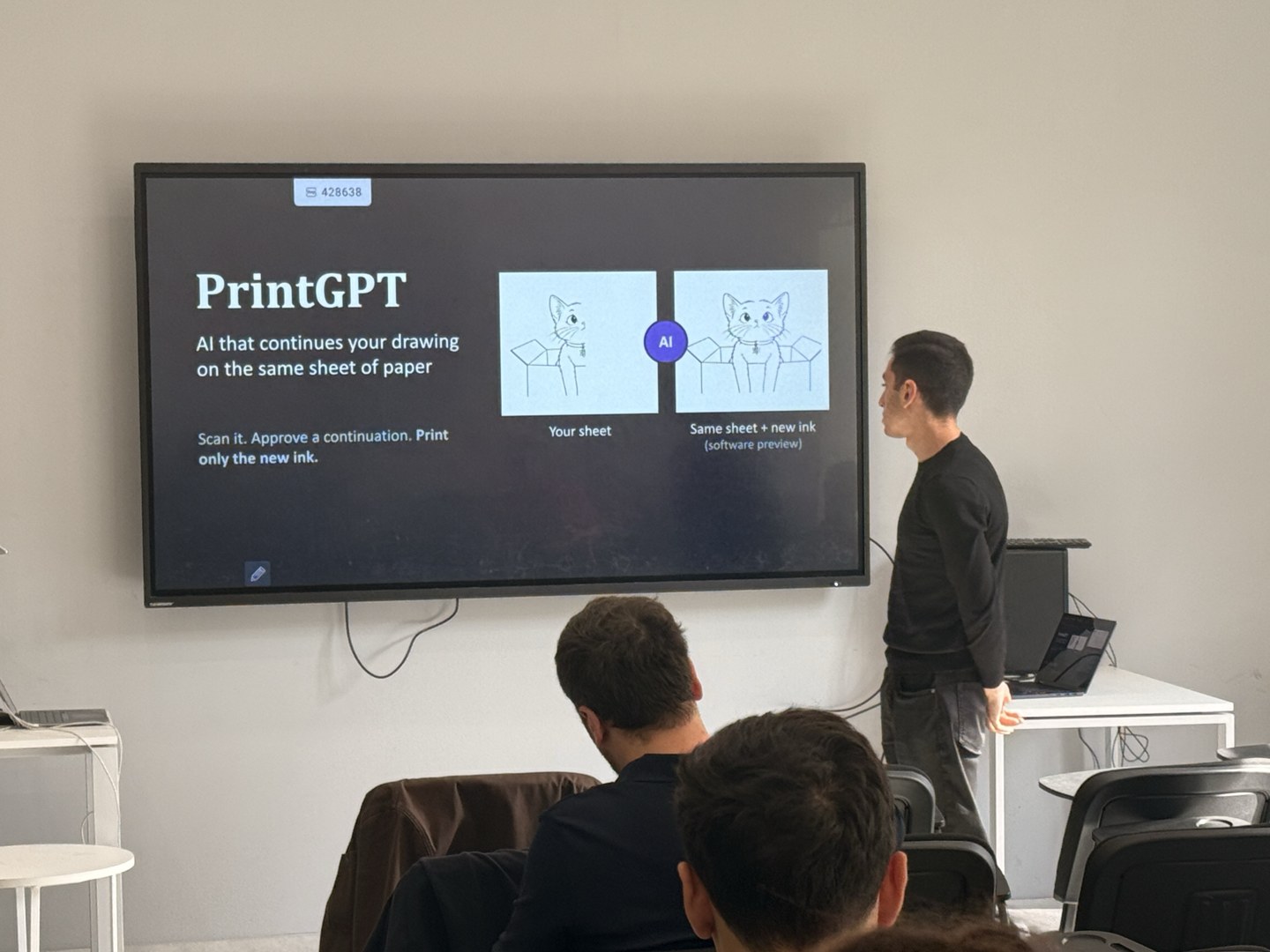
PrintGPT
A scan-to-AI-to-print workflow that proposes additions to an unfinished drawing, protects the existing marks, and asks the user to approve what will be printed.
Lab Watchdog
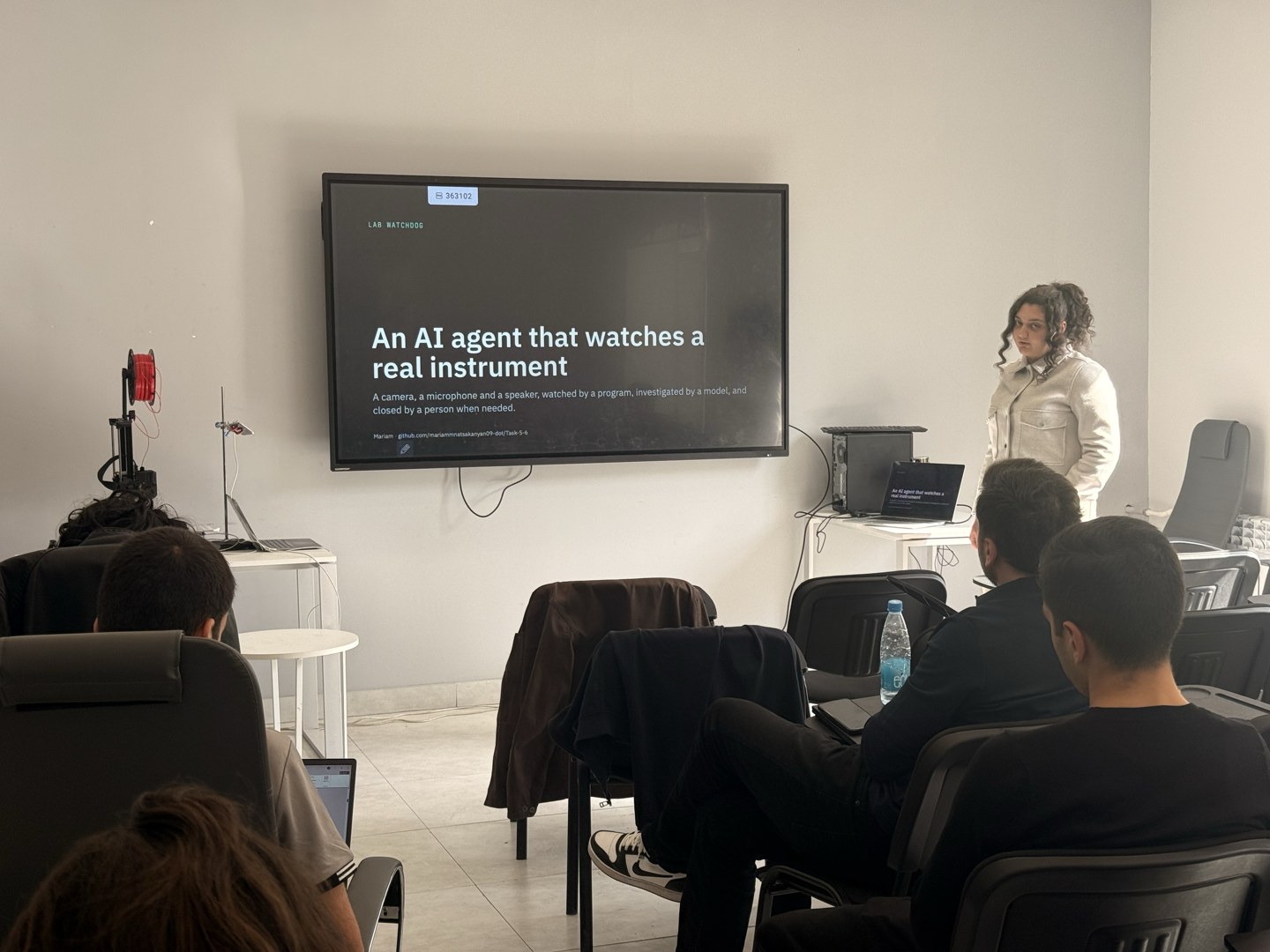
Camera and audio monitoring with a lightweight detection loop, AI-supported investigation, and independent checks after an intervention.
Agentic hardware chain
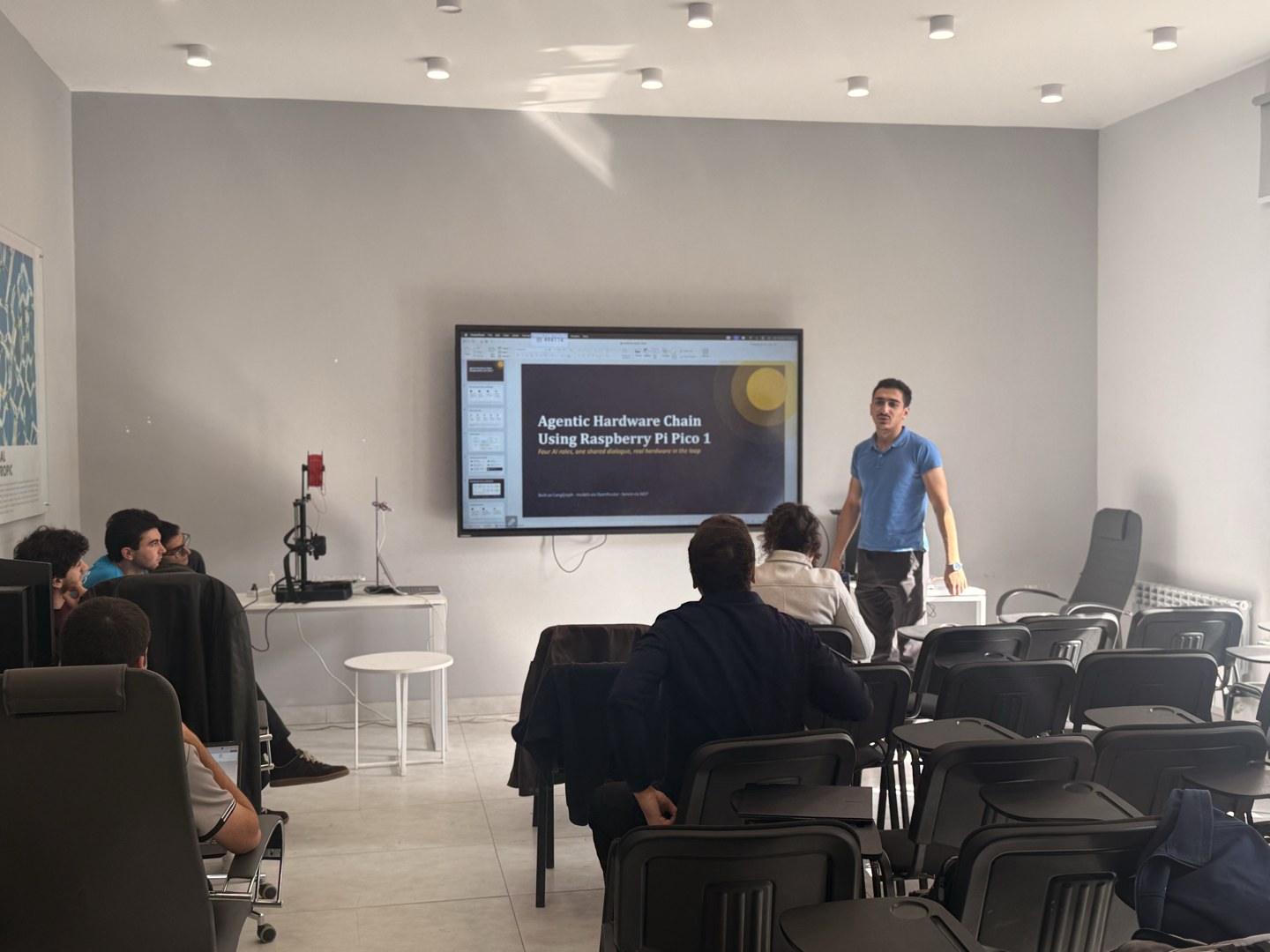
A Raspberry Pi Pico light bench linking AI agents, LED control, and light measurements. Repeated measurements run locally while the agents plan and interpret the task.
PhotonicsAI Lab Assistant
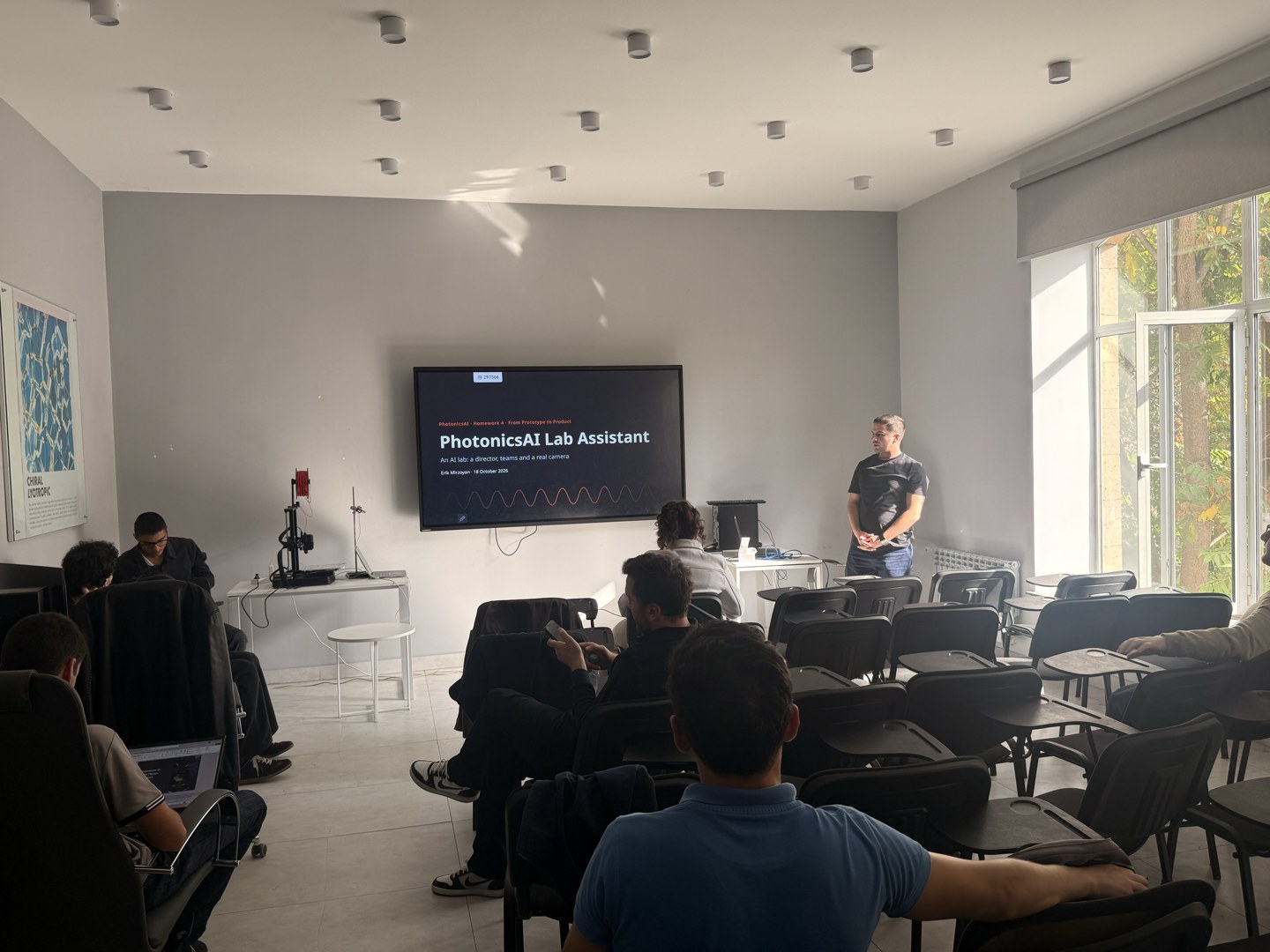
An application bringing together modelling, a simulated light-focusing bench, and a real scientific camera, with visible results and human approval for hardware actions.
Laser scattering and optical vibration sensing
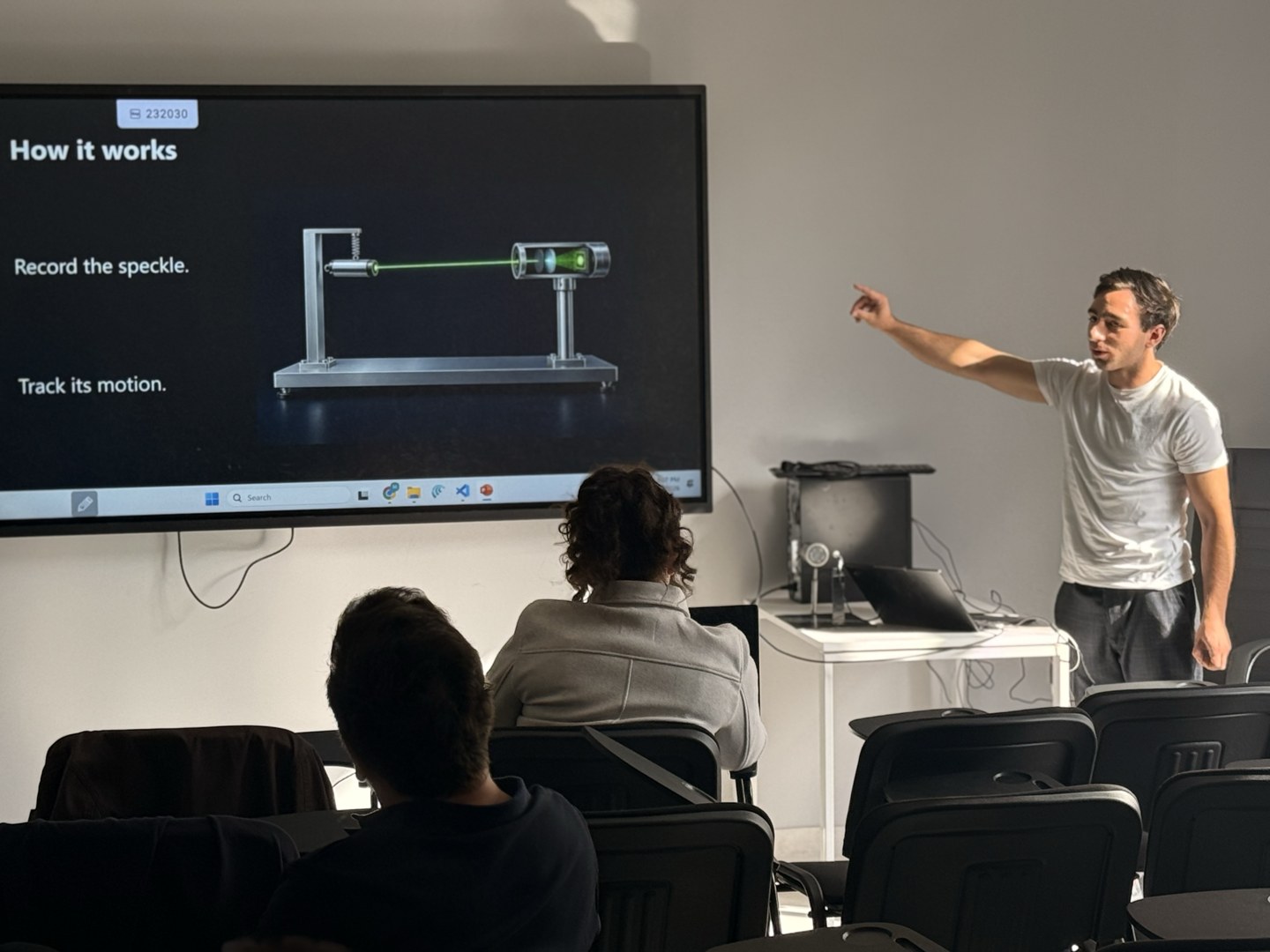
A project investigating how vibrations can be measured by tracking motion in laser speckle patterns with a camera. The setup connects optical measurements with AI agents for coordinating acquisition and analysing the recorded motion.
Camera-guided motion
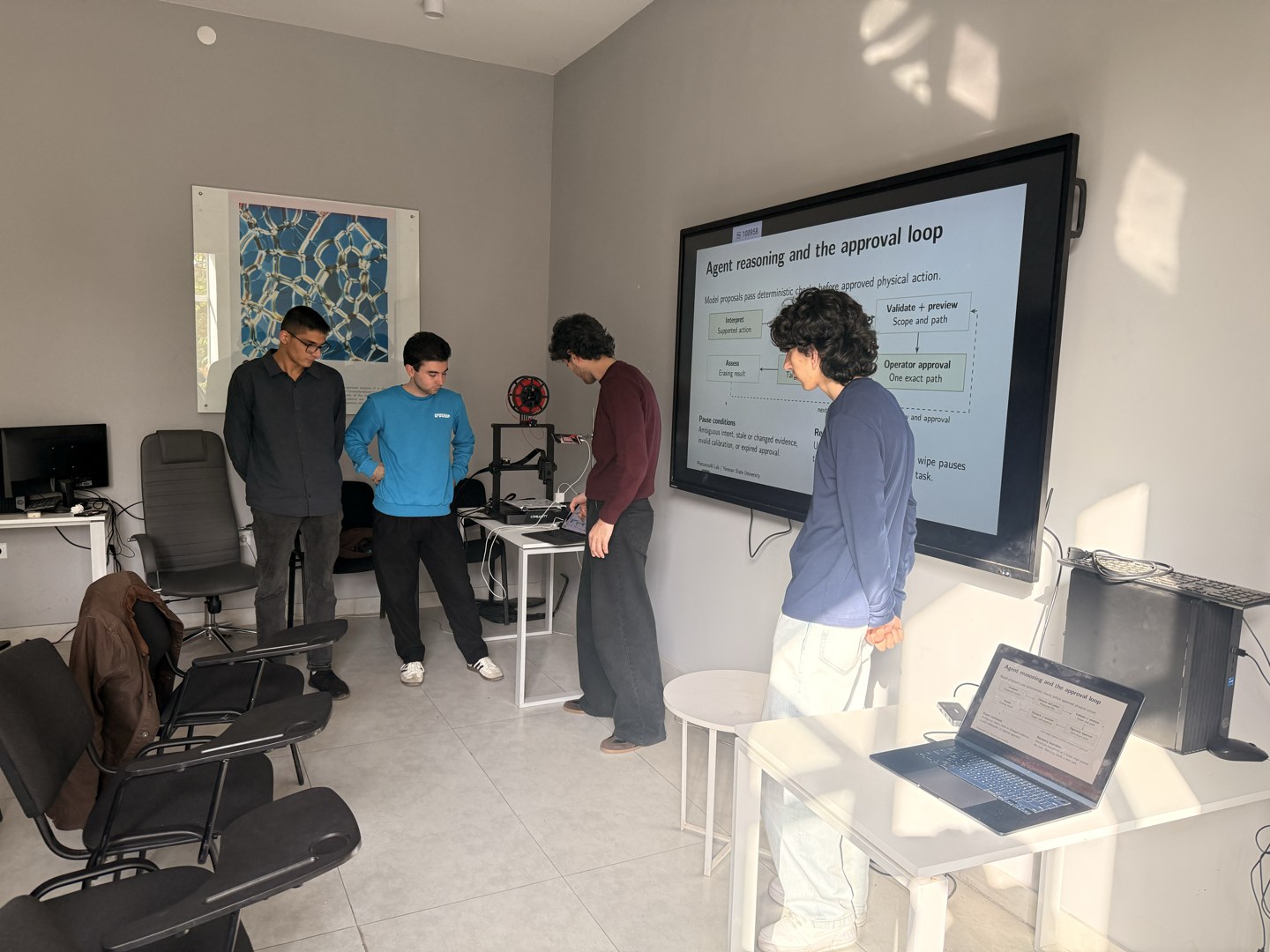
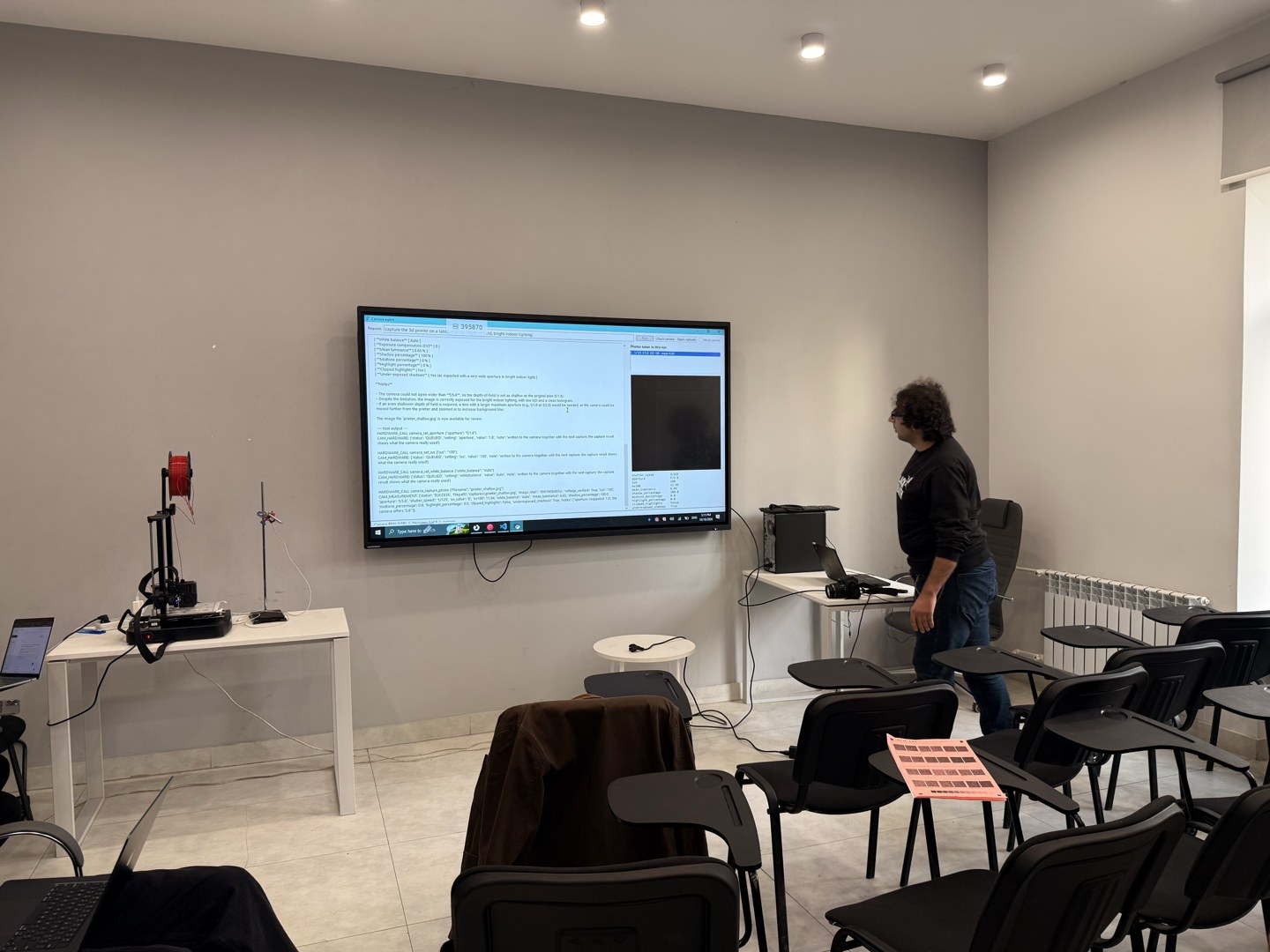
A camera measures coloured marks on a board and a 3D printer supplies controlled motion to erase selected regions. The operator reviews and approves a bounded path before execution.
From experiments to printed reports
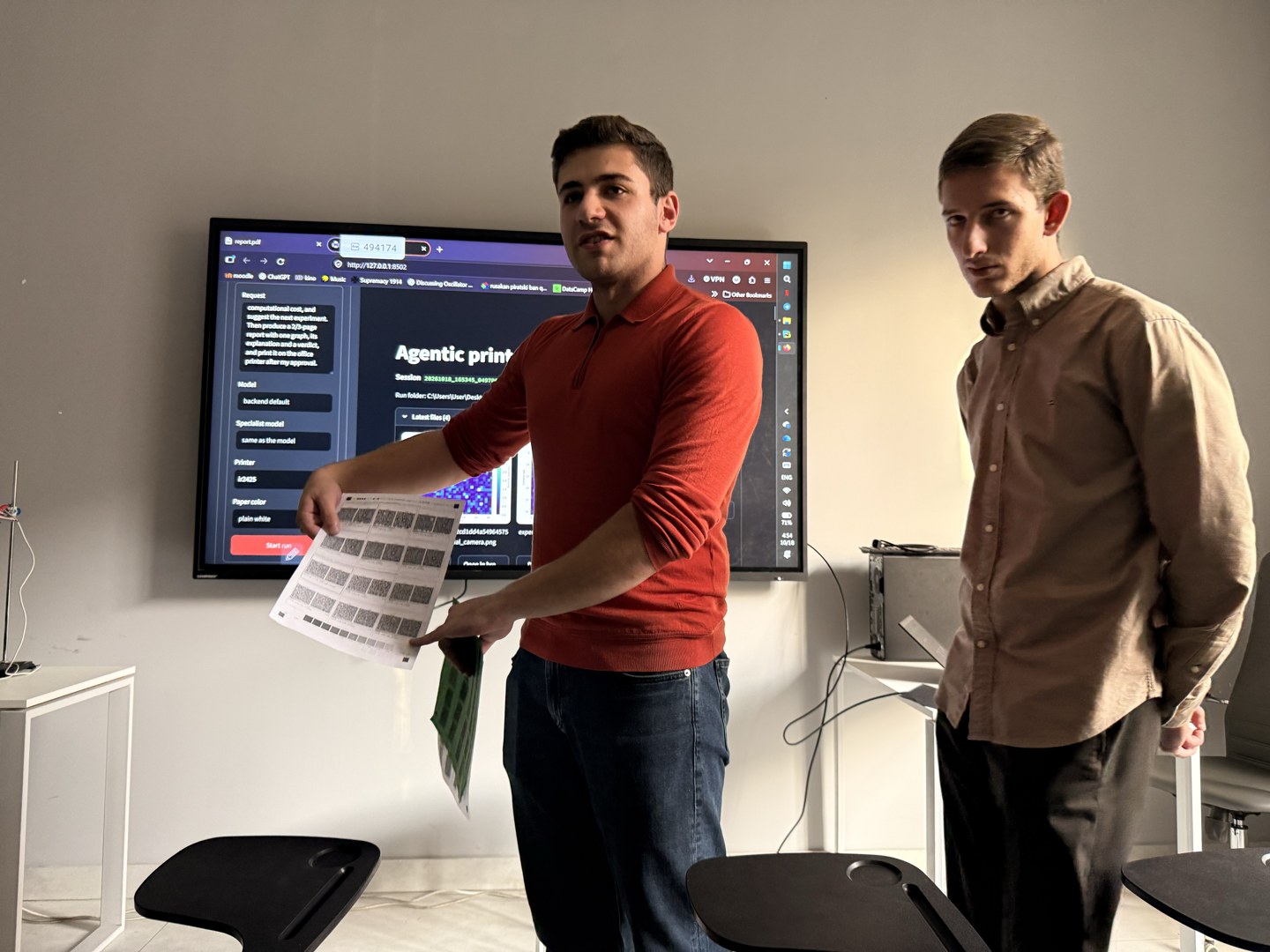
A workflow from experiments on a simulated light-focusing bench to reporting and office-printer output, with human checkpoints between experimental choices and physical actions.
Autonomous LED Lab
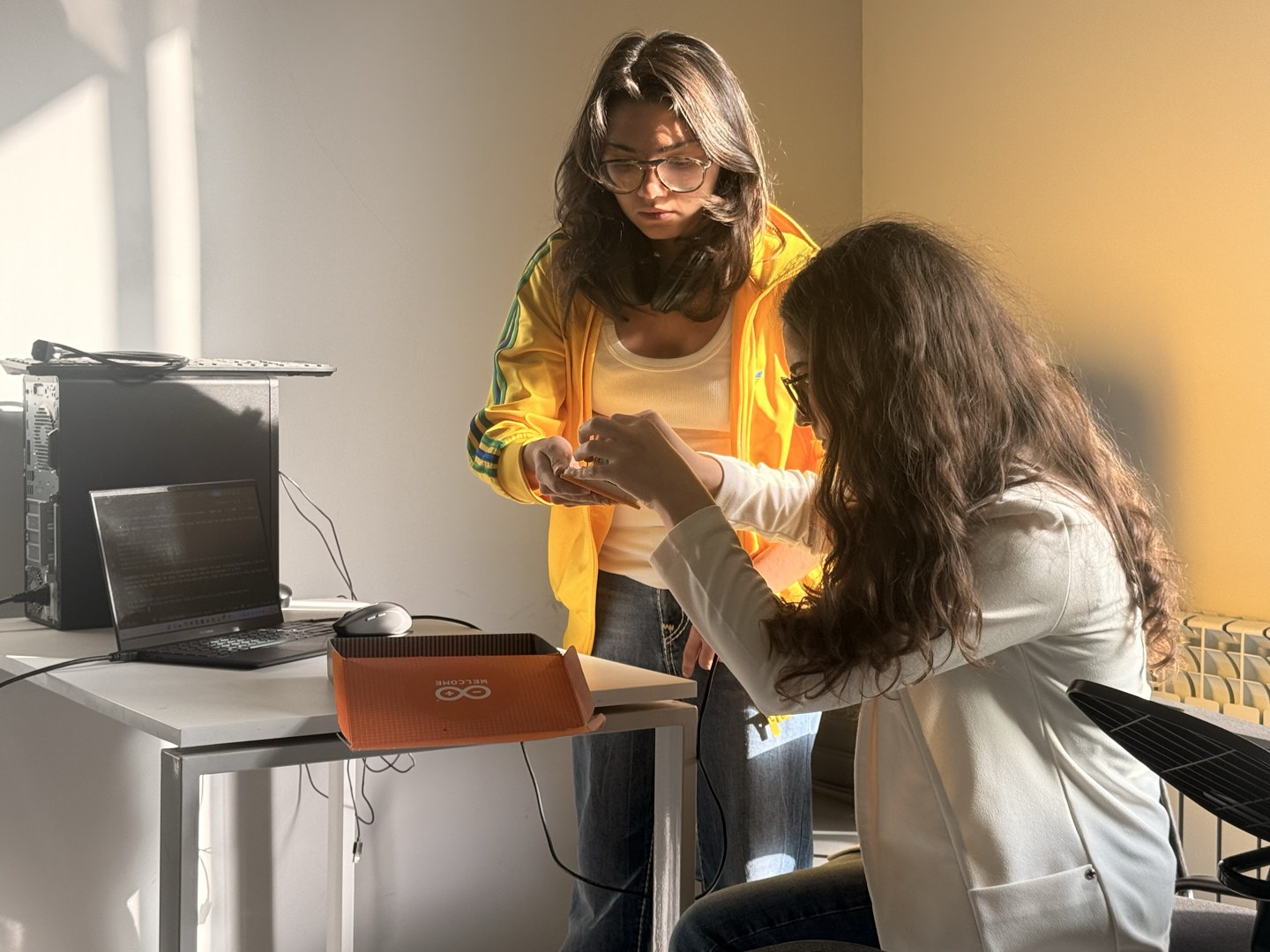
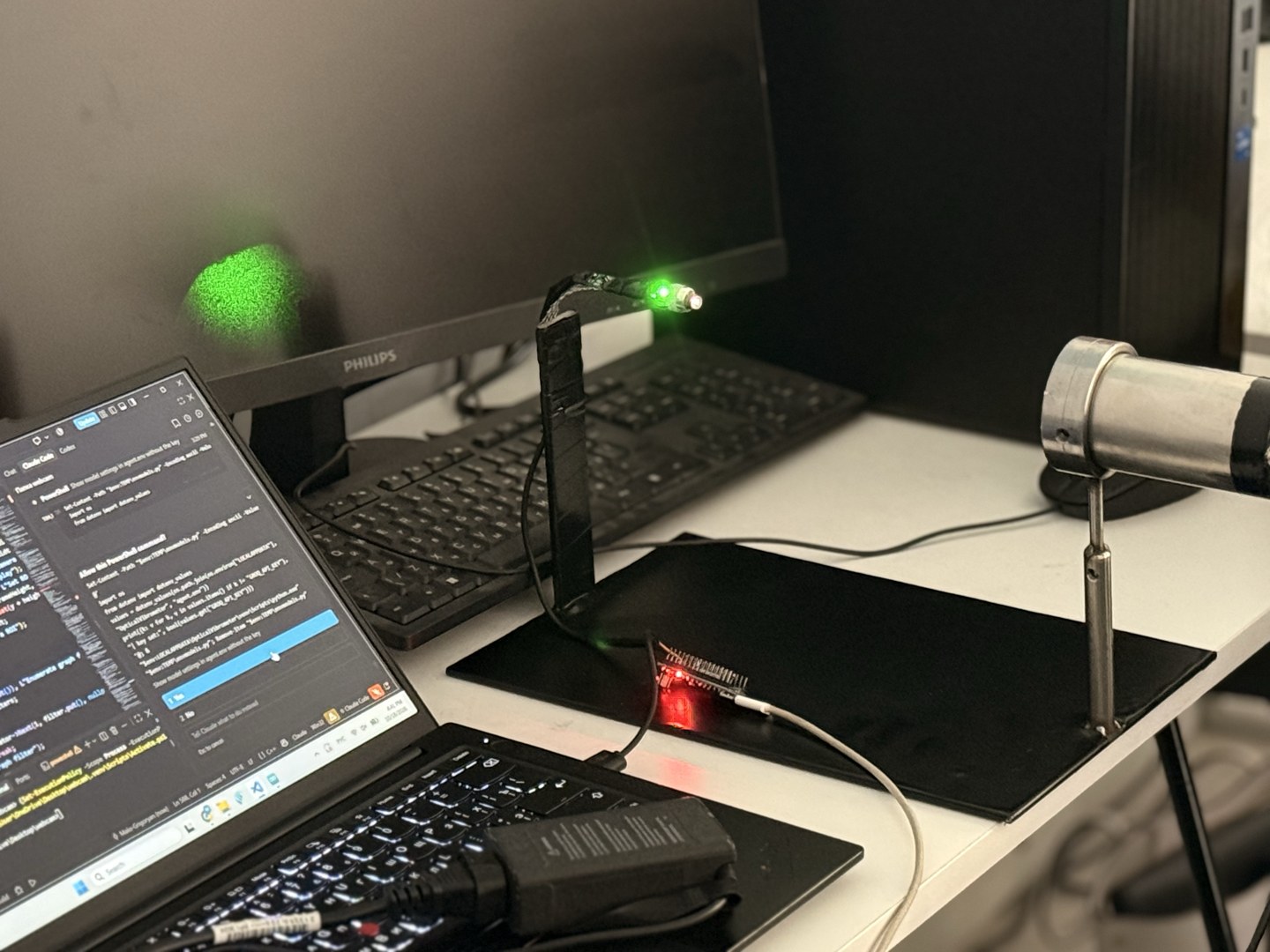
An Arduino-based colour bench using red, green, and blue LEDs and a light sensor to investigate filter transmission, with AI agents coordinating measurements and requesting human checks when needed.
LUMEN Dual-Vision
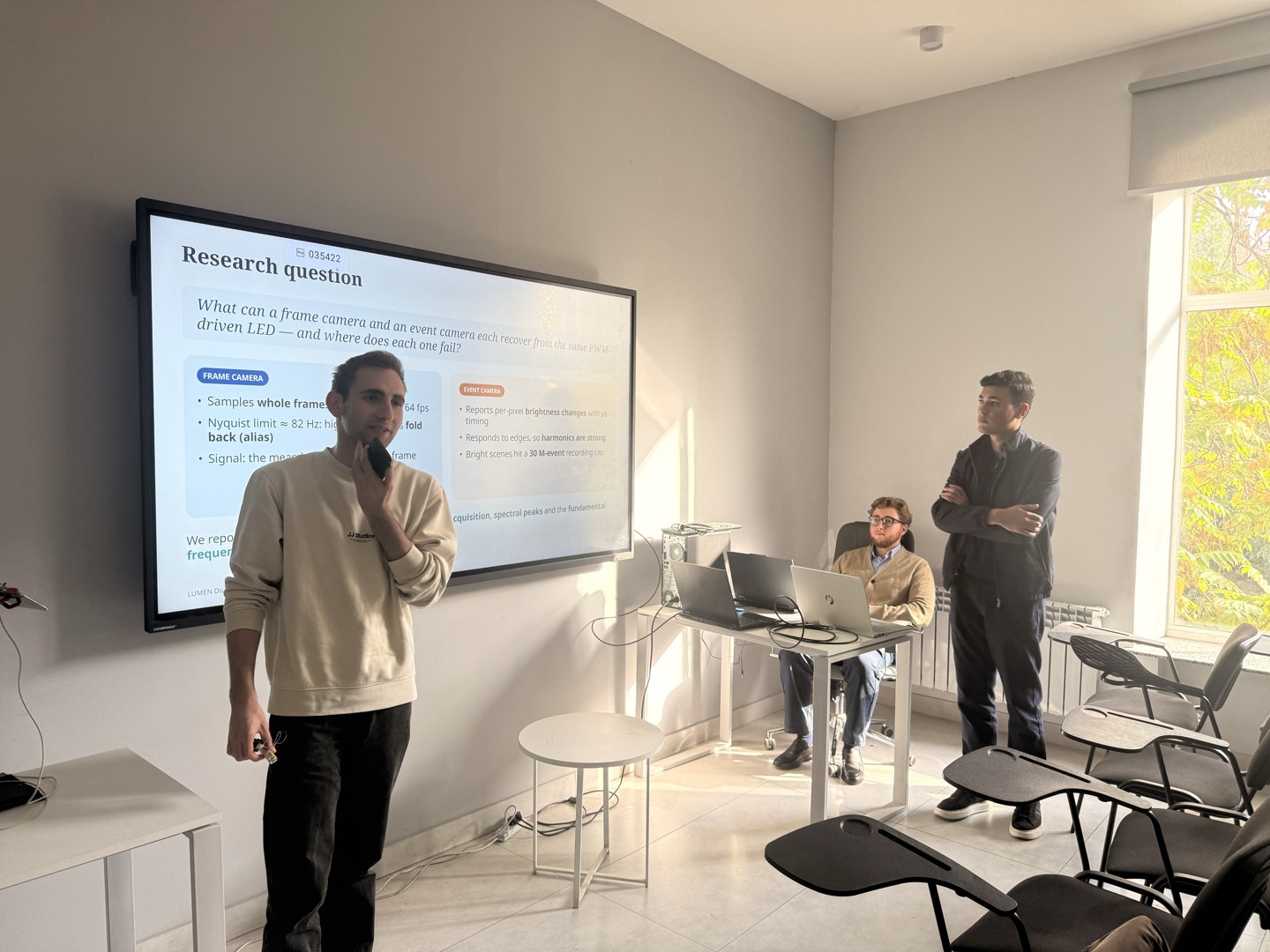
A project connecting conventional camera and event-camera acquisition to optical flicker measurements, shared data formats, and a comparison interface.
AI-guided photography
A Canon camera connected to an agent workflow and a desktop interface for exposure adjustment, image inspection, and human review.
AI-guided electrical characterisation with an Ossila SMU
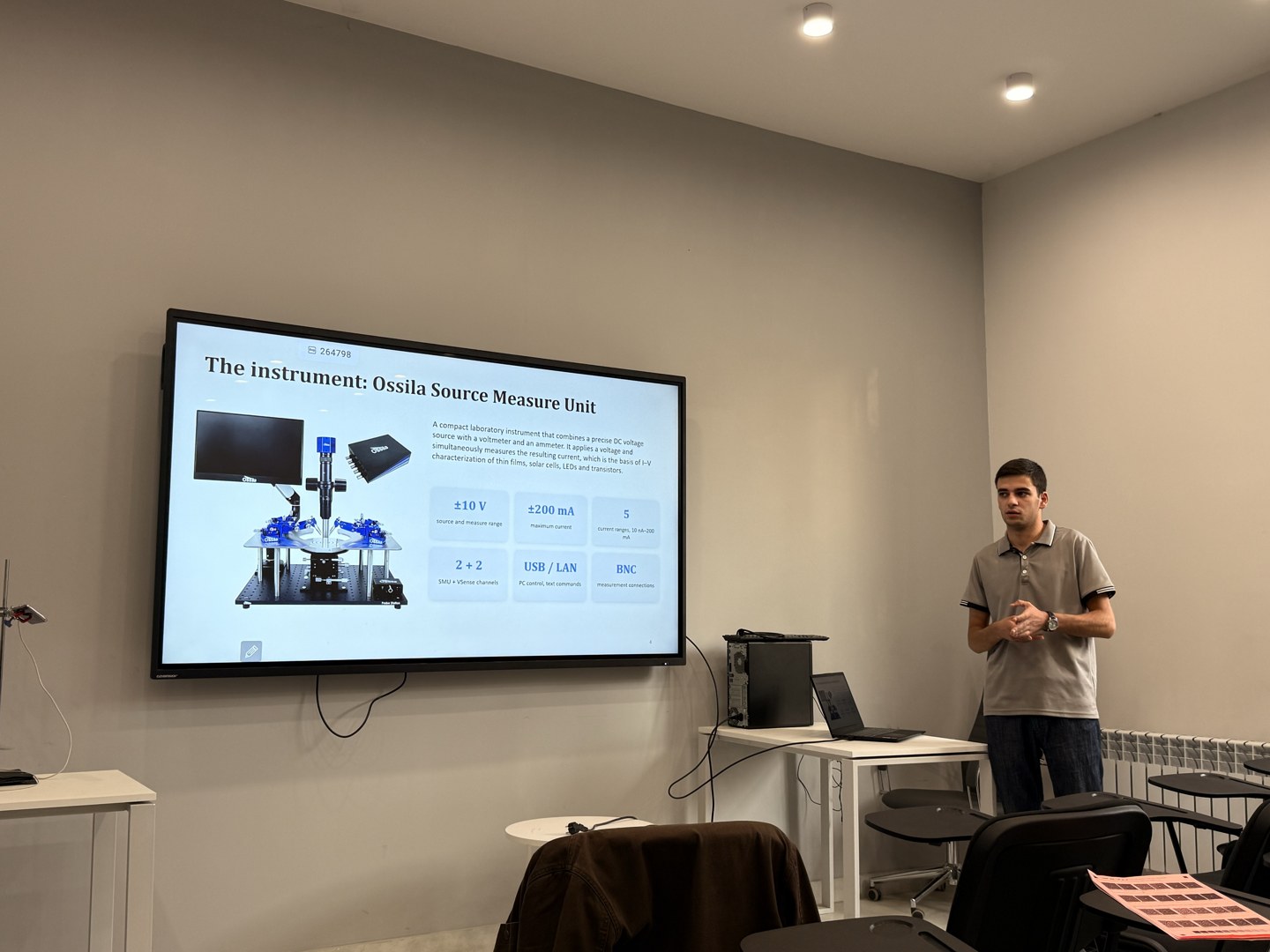
A project exploring AI-guided electrical characterisation through an Ossila source measure unit, with a measurement interface and tools for current–voltage analysis.
Course in pictures
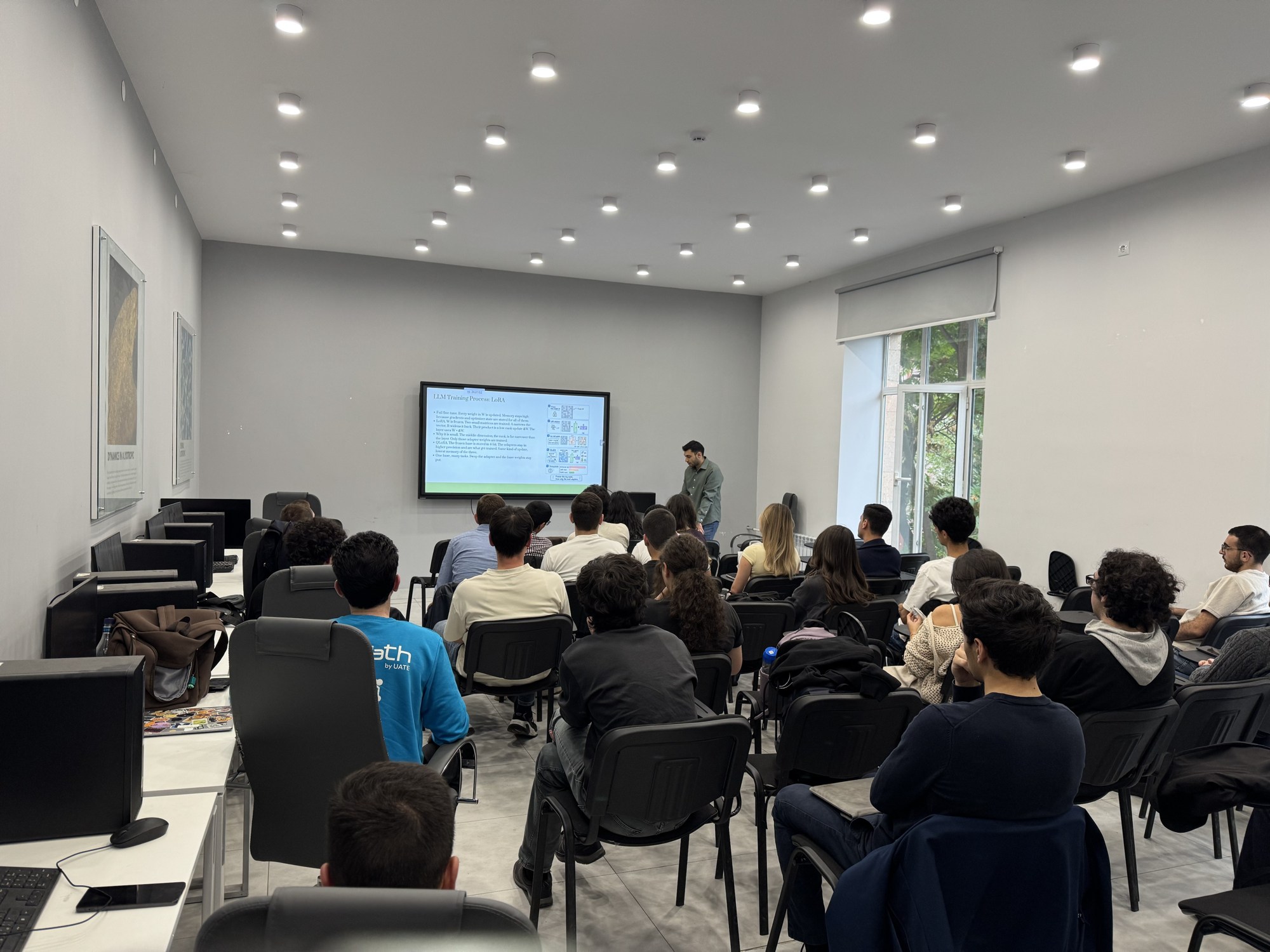
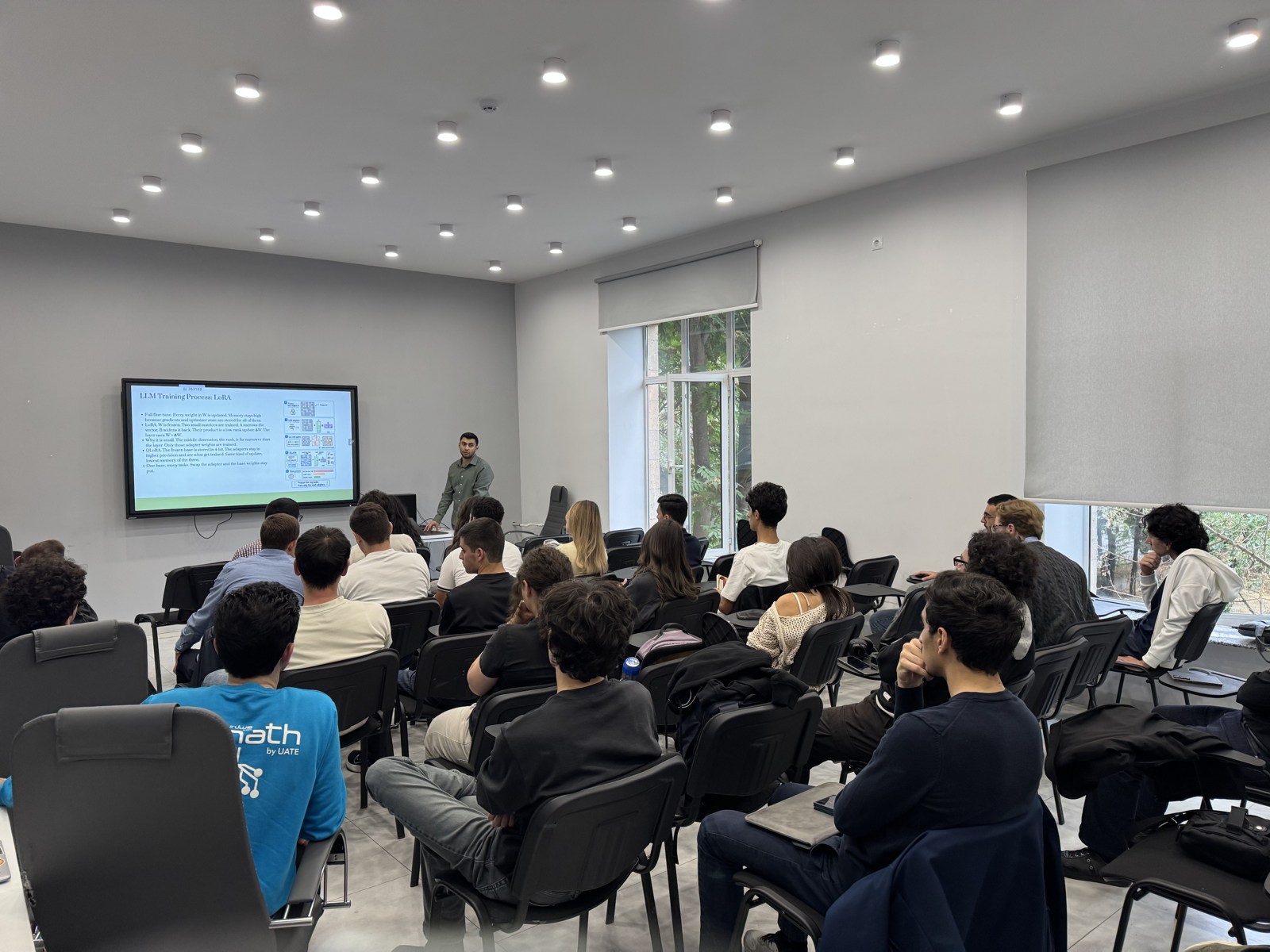
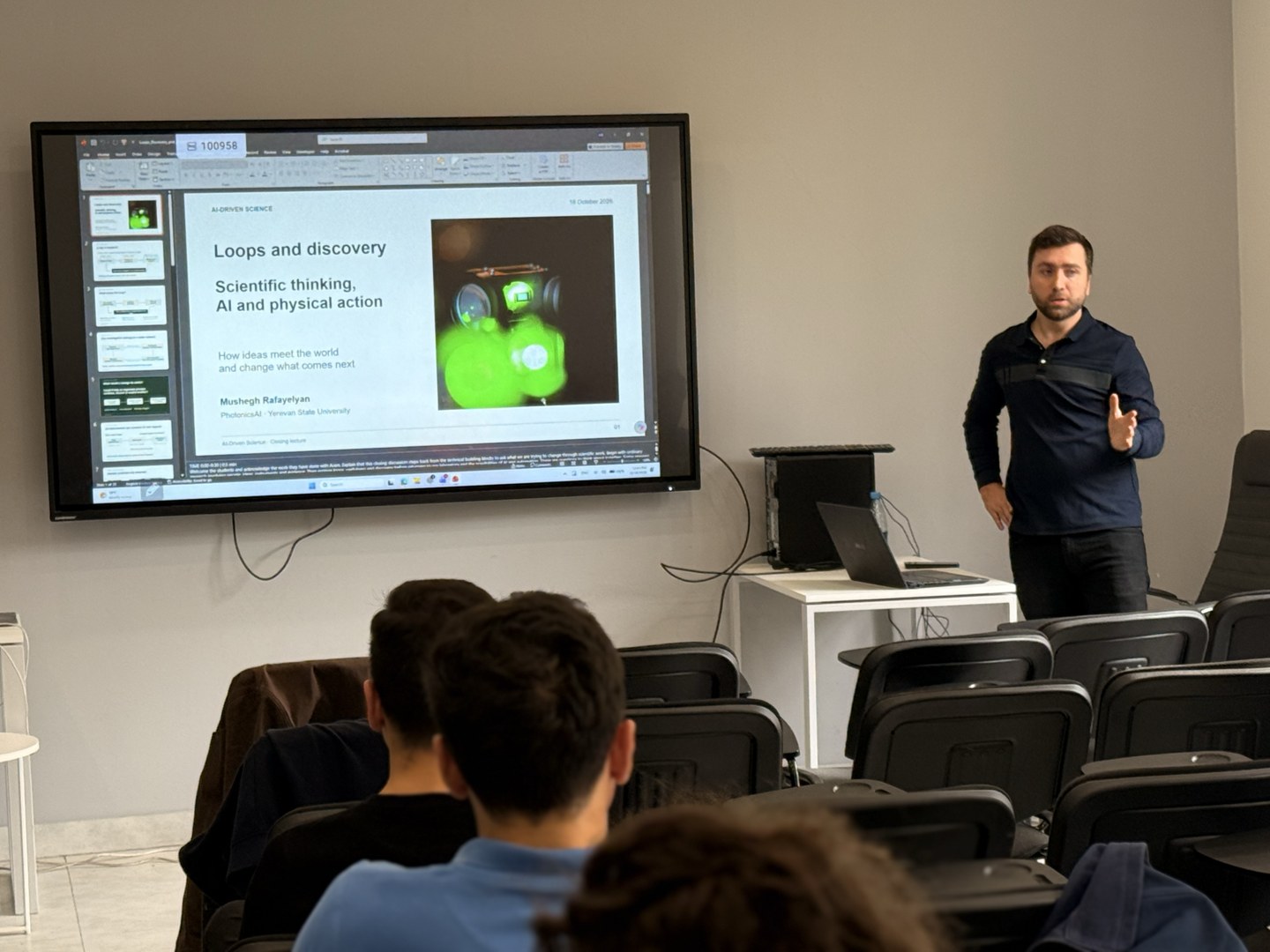
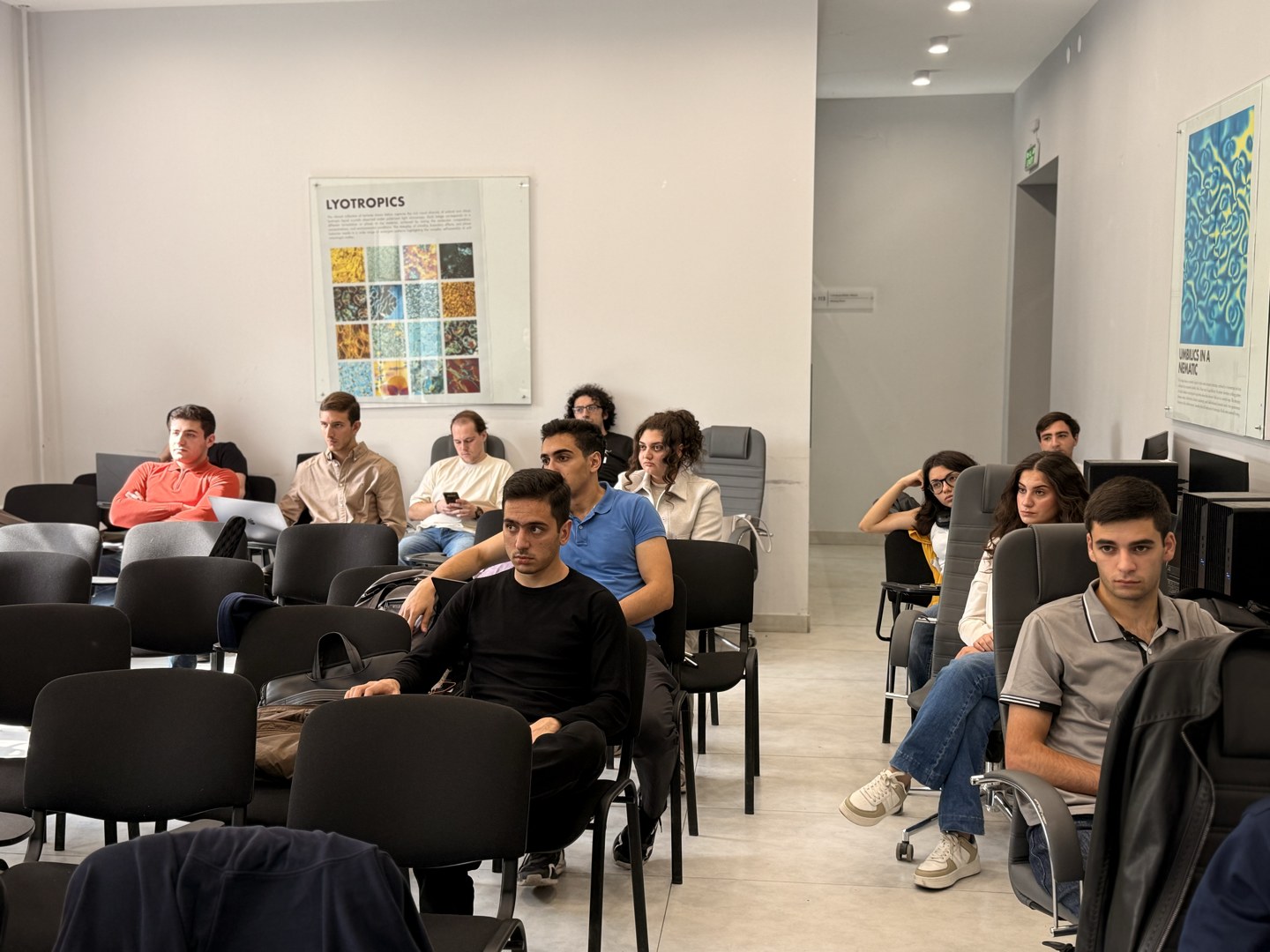
The opening and closing lectures, group presentations, and live demonstrations. Select a photo to view it at a larger size.
Course team and setting
Lecturers: Aram Sargsyan (main lecturer) and Mushegh Rafayelyan.
Teaching and practical support: Nikita Marinin.
The course was hosted by PhotonicsAI Lab at the Center for Optics and Photonics, Institute of Physics, Yerevan State University.